


Process
The locked brief: why AI design starts with an interview
The short version
- Without a locked brief, every revision is a fresh negotiation and no two variants answer the same question.
- A useful brief locks the audience, the format and ratio, the facts that may be claimed, and the imagery rules before any design exists.
- Locking is the point: variants become comparable, feedback becomes checkable, and 'is this right?' has a written answer.
Kamply is a Mac app that builds posts and reels with you, on your brand. It works with your own Claude Code or Codex subscription. See pricing.
Prompt roulette, named
The default way people use AI for design is a loop: describe what you want, look at what comes back, describe again. It feels like iteration, but nothing accumulates. The tool never knows which properties of the last attempt were requirements and which were accidents.
Design teams solved this decades ago with the brief. The AI version of the problem needs the same instrument, held more strictly, because the machine on the other end has no memory of your intent unless it's written down.
By round five you're negotiating with a slot machine.
What locks in a Kamply brief
Before any design exists, Kamply interviews you and locks the answers:
- Audience: who this piece must mirror, specifically enough to reject imagery that doesn't.
- Format and ratio: a 4:5 feed post, a 9:16 reel, a carousel with a set slide count.
- Facts: the claims the piece may make, each one checkable. An unsourced number can't enter later.
- Imagery rules: real product shots when they exist, stock with provenance when they don't, and what's out of bounds.
- Per-variant direction: each proposed variant declares its visual lead, so options differ on purpose.
Why 'locked' is the important word
A brief you can quietly edit mid-build is a suggestion. Locking it changes what every later step means: variants become answers to the same question, so comparing them is fair. Feedback becomes checkable against something written. And when a piece is done, the brief is the record of what 'done' meant.
Locking also disciplines the machine. Kamply's checks read the brief: a deliverable claiming a fact the brief doesn't sanction, or using imagery the brief ruled out, fails before a human sees it.
The short interview that replaces the hour
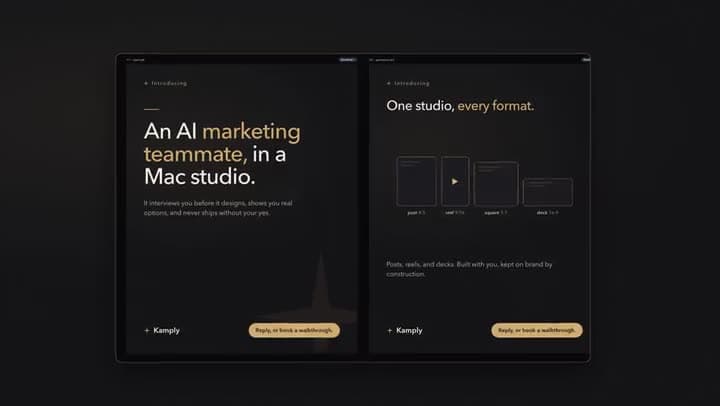
The interview is a short run of plain questions. It replaces the hour of prompt roulette and the far more expensive outcome: a finished piece that's polished, on time, and wrong. If you'd rather see it than read about it, book a walkthrough and bring one brief.
Questions this post answers
- What if I don't know the answers to the interview?
- Then the interview has done its job early. It surfaces the decision you haven't made yet, and meeting it in a short conversation beats discovering it in revision round four.
- Can the brief change after it locks?
- Deliberately, yes: you can re-open and re-lock it, and the build restarts from the change. What it can't do is drift silently while the work is in flight.
- Do I write the brief myself?
- No. Kamply asks; you answer in plain words. The structure (audience, format, facts, imagery, per-variant direction) is the product's job to hold.